

- Understanding Camera Microphone Fundamentals
- Microphone Polar Patterns and Their Applications
- Essential Equipment for Professional Camera Microphone Setup
- Audio Monitoring and Recording Accessories
- Camera Integration and Signal Flow Management
- Audio Level Setting and Gain Structure
- Positioning Strategies for Optimal Audio Capture
- Environmental Acoustic Considerations
- Troubleshooting Common Audio Issues
- Frequently Asked Questions About Camera Microphone Setup
- Advanced Techniques for Professional Results
Understanding Camera Microphone Fundamentals
Camera microphone setup represents the cornerstone of professional audio acquisition in visual storytelling. The symbiotic relationship between visual and auditory elements determines the efficacy of your production workflow. Understanding the nuances of microphone placement, signal routing, and environmental acoustics forms the bedrock of superior audio capture.
Transduction principles govern how sound waves convert into electrical signals. Your camera's preamp circuitry amplifies these minuscule voltages into recordable levels. However, the quality of this conversion depends heavily on microphone selection and positioning relative to your subject matter.
Microphone Polar Patterns and Their Applications
Directional characteristics determine which sounds your microphone captures or rejects. Cardioid patterns excel in controlled environments where subject isolation is paramount. Their heart-shaped pickup pattern naturally attenuates ambient noise while maintaining focus on primary audio sources.
Omnidirectional microphones capture sound equally from all directions. These work exceptionally well for environmental storytelling where ambient soundscapes enhance narrative immersion. Shotgun microphones employ highly directional patterns, making them indispensable for distant subject recording where physical proximity isn't feasible.
Essential Equipment for Professional Camera Microphone Setup
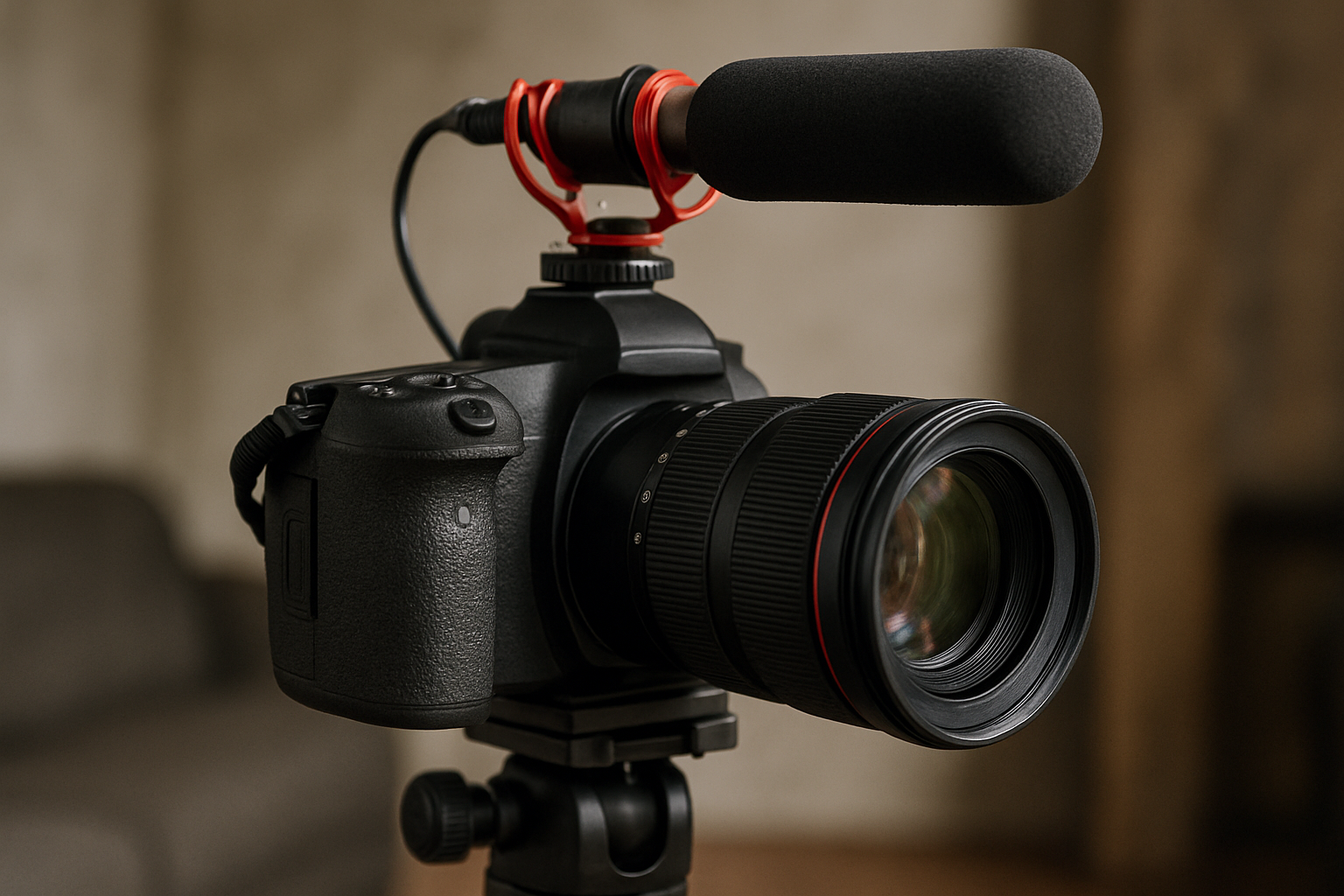
Your microphone selection directly impacts final audio quality. On-camera shotgun microphones provide convenience and portability for run-and-gun filming scenarios. Their interference tube design effectively cancels off-axis noise while maintaining sensitivity to frontal audio sources.
Wireless microphone systems offer unparalleled flexibility in dynamic shooting environments. These systems consist of transmitter units, receiver modules, and dedicated microphone capsules. The operational frequency spectrum determines system reliability and interference susceptibility in crowded RF environments.
Audio Monitoring and Recording Accessories
Closed-back headphones enable real-time audio monitoring without signal bleed or feedback loops. Their impedance characteristics should match your camera's headphone output specifications for optimal signal transfer. Professional-grade headphones reveal subtle audio defects that consumer models might mask.
Quality audio monitoring prevents costly post-production fixes and ensures your recordings meet professional broadcasting standards from the initial capture stage.
Wind protection accessories safeguard microphone diaphragms from airflow disturbances. Foam windscreens provide basic protection for indoor applications, while furry windshields excel in challenging outdoor conditions where wind speeds exceed moderate levels.
Camera Integration and Signal Flow Management
Input impedance matching ensures optimal signal transfer between microphone outputs and camera preamp inputs. Mismatched impedance levels result in signal degradation, increased noise floors, and diminished dynamic range capabilities.
Phantom power requirements vary among microphone technologies. Condenser microphones typically require 48-volt phantom power for proper operation. Your camera must provide sufficient current capacity to maintain stable microphone performance throughout extended recording sessions.
Audio Level Setting and Gain Structure
Proper gain staging prevents signal distortion while maintaining adequate signal-to-noise ratios. Peak levels should consistently reach -12dB to -6dB on your camera's audio meters, providing sufficient headroom for unexpected volume spikes without clipping distortion.
| Microphone Type | Recommended Input Level | Phantom Power Required |
|---|---|---|
| Dynamic | -20dB to -15dB | No |
| Condenser | -15dB to -10dB | Yes |
| Ribbon | -25dB to -20dB | No |
Manual gain control provides consistent audio levels across varying performance scenarios. Automatic gain control systems often introduce pumping artifacts and unpredictable level fluctuations that compromise professional audio standards.
Positioning Strategies for Optimal Audio Capture
Microphone placement significantly influences tonal characteristics and ambient noise rejection. The proximity effect enhances bass frequencies when subjects move closer to directional microphones. Understanding this phenomenon allows creative manipulation of vocal warmth and presence.
Height positioning affects sound quality and visual aesthetics simultaneously. Microphones positioned slightly above subject mouth level capture cleaner vocals while remaining outside camera frame boundaries. This elevation also minimizes breathing sounds and plosive consonant impacts.
Environmental Acoustic Considerations
Room acoustics dramatically alter recorded sound characteristics. Hard surfaces create reflections that manifest as echo or reverb in final recordings. Strategic microphone positioning can minimize these reflections while preserving natural vocal qualities.
Background noise assessment determines appropriate microphone selection and placement strategies. High-sensitivity microphones excel in quiet environments but may capture excessive ambient noise in challenging acoustic spaces.
Troubleshooting Common Audio Issues
Interference problems often originate from electronic devices operating in similar frequency ranges. Cell phones, wireless routers, and other RF sources can introduce clicking, buzzing, or dropout artifacts into wireless microphone systems.
Ground loop issues manifest as constant humming or buzzing sounds in recorded audio. These electrical anomalies occur when multiple ground paths exist between connected equipment. Isolation transformers or ground lift adapters typically resolve these signal integrity problems.
Frequently Asked Questions About Camera Microphone Setup
- How do I eliminate wind noise without affecting audio quality?
- What's the ideal distance between microphone and subject?
- Can I use multiple microphones simultaneously on one camera?
- How do I sync wireless audio with camera footage?
- What backup recording methods should I implement?
Signal redundancy protects against equipment failures during critical recording sessions. Dual-channel recording with primary and backup microphones ensures audio continuity even when primary systems malfunction unexpectedly.
Advanced Techniques for Professional Results
Audio mixing during recording allows real-time balance adjustments between multiple microphone sources. This technique proves invaluable for interview scenarios where multiple participants require individual level control.
Frequency response compensation addresses microphone coloration through strategic equalization. Understanding your microphone's inherent frequency characteristics enables corrective measures that achieve neutral, broadcast-quality sound reproduction.
Mastering camera microphone setup transforms amateur recordings into professional productions. These techniques ensure your audio quality matches your visual excellence, creating immersive content that resonates with audiences across all platforms.




Share:
Photography Backdrop Setup: Creating Professional Shots at Home
Video Light Placement: Pro Tips for Perfect Lighting