

- Understanding Audio Cable Fundamentals
- Common Audio Cable Types and Their Applications
- XLR Cables for Professional Applications
- TRS and TS Cables for Instruments and Line-Level Signals
- RCA Cables for Consumer and DJ Equipment
- Choosing Cable Length and Gauge
- Balanced vs. Unbalanced Connections
- Connector Quality and Build Construction
- Shielding Technology and Interference Rejection
- Digital Audio Cables: A Different Paradigm
- When to Invest in Premium Cables
- Cable Management and Maintenance Best Practices
- Frequently Asked Questions About Audio Cables
- Do expensive audio cables really sound better?
- How do I eliminate hum and noise from my audio setup?
- Can I use instrument cables for microphone applications?
- Building Your Ideal Audio Cable Collection
- Making Informed Purchasing Decisions
In the intricate world of audio engineering and sound reproduction, cables serve as the vital conduits between your equipment and pristine sonic delivery. Whether you're a seasoned DJ spinning tracks at packed venues, a videographer capturing crystal-clear dialogue, or a musician perfecting your studio recordings, understanding cable technology transforms your audio setup from mediocre to magnificent. The labyrinthine selection of connectors, gauges, and shielding options can overwhelm even experienced professionals, making informed decisions paramount to achieving optimal signal integrity.
This comprehensive audio cables guide demystifies the complexities surrounding cable selection, equipping you with knowledge to make investment-worthy decisions for your specific requirements. From distinguishing balanced versus unbalanced configurations to recognizing when premium construction justifies the expenditure, we'll navigate through the essential considerations that separate amateur setups from professional-grade systems.
Understanding Audio Cable Fundamentals
Audio cables function as electrical pathways transmitting analog or digital signals between devices. The conductor material, typically copper or oxygen-free copper (OFC), determines resistance levels and signal degradation potential. Superior conductors maintain signal fidelity across extended distances, minimizing the dreaded signal attenuation that plagues low-quality alternatives.
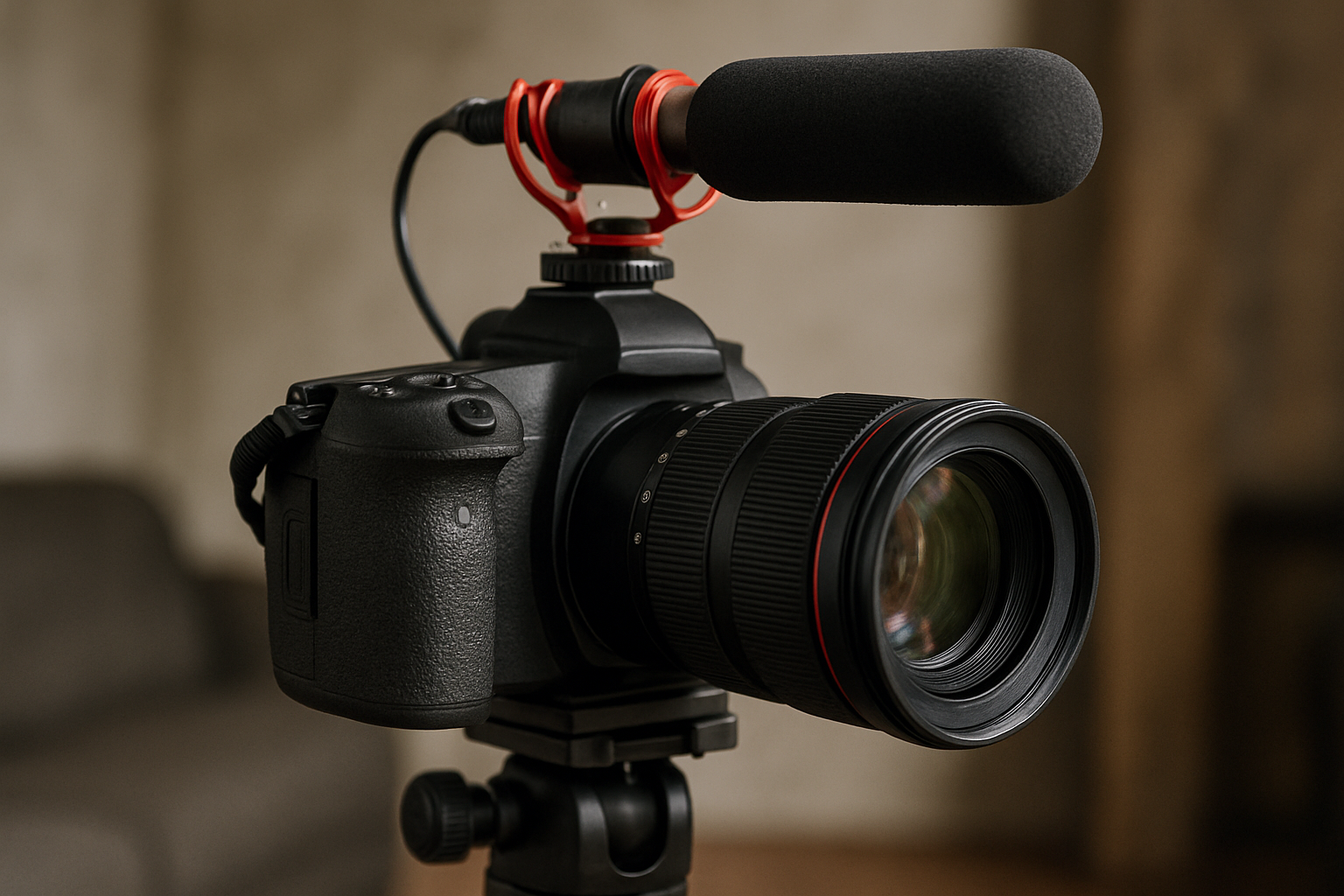
Shielding represents another critical component protecting your audio signal from electromagnetic interference (EMI) and radio frequency interference (RFI). Braided shields offer comprehensive coverage, while spiral or serve shields provide flexibility for applications requiring frequent movement. Photographers working with camera-mounted microphones benefit immensely from well-shielded cables that reject interference from electronic camera components.
The dielectric insulation separating conductors influences capacitance, which affects high-frequency response in longer cable runs. Premium dielectrics like polyethylene or Teflon minimize signal loss, particularly crucial for videographers capturing nuanced ambient soundscapes or musicians tracking delicate instrumental passages.
Common Audio Cable Types and Their Applications
XLR Cables for Professional Applications
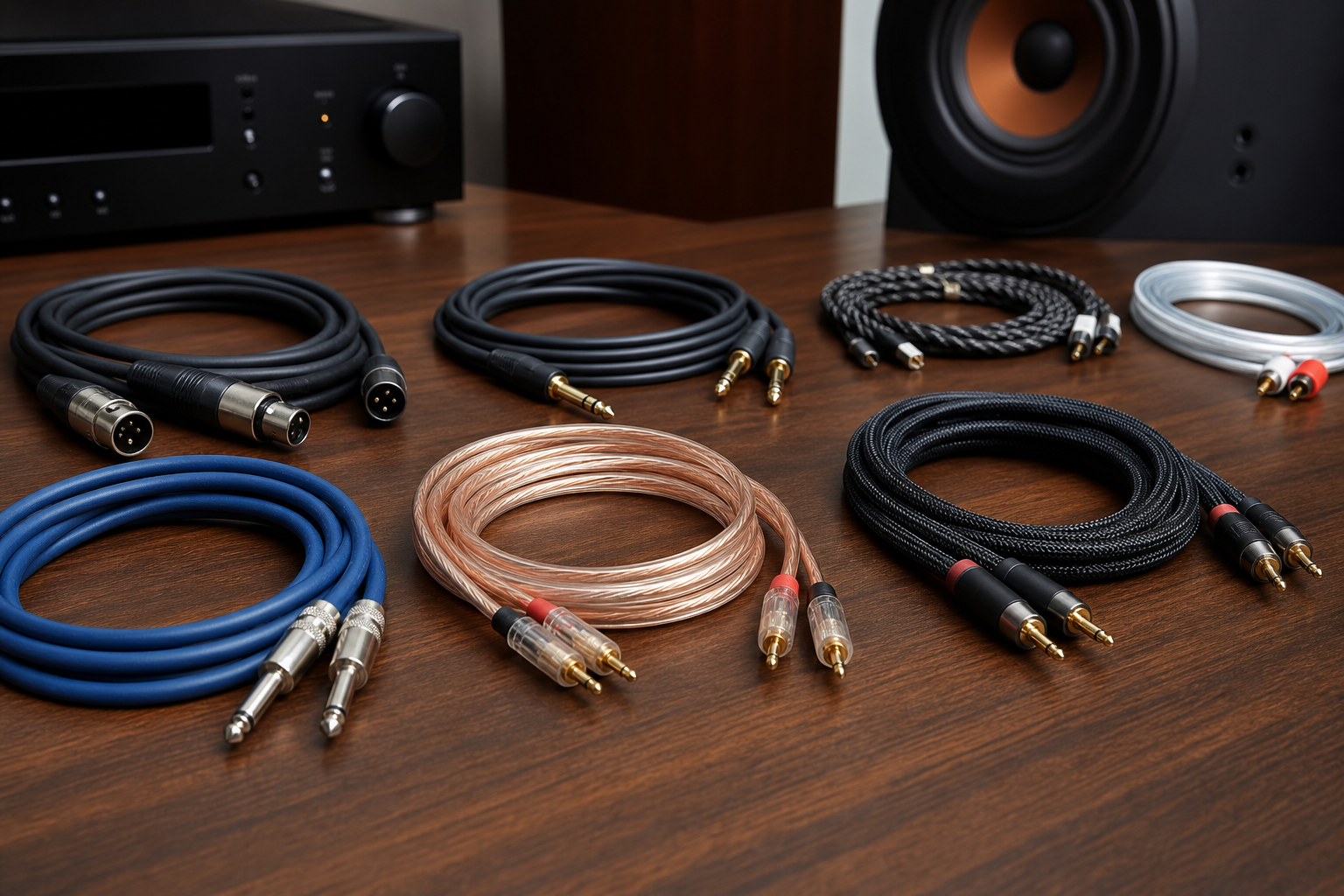
XLR cables reign supreme in professional audio environments, featuring balanced three-pin connectors that dramatically reduce noise and interference. The balanced configuration utilizes two conductors carrying identical signals with opposite polarity, plus a ground wire. When signals reach the destination, any noise affecting both conductors equally gets cancelled out, preserving pristine audio quality.
DJs operating in electromagnetically hostile environments—venues with dimmer systems, LED lighting rigs, and wireless networks—rely on XLR connections for microphones and active speaker connections. The robust locking mechanism prevents accidental disconnections during performances, a reliability factor that justifies their prevalence in demanding scenarios. Musicians recording in professional studios invariably encounter XLR cables connecting microphones to preamps or mixing consoles, establishing an industry standard for serious audio work.
TRS and TS Cables for Instruments and Line-Level Signals
The ubiquitous quarter-inch connector appears in two configurations: TRS (Tip-Ring-Sleeve) and TS (Tip-Sleeve). TRS cables carry balanced signals or stereo information, while TS cables handle unbalanced mono signals. Musicians connecting keyboards, synthesizers, or guitars to amplifiers typically use TS cables for instrument-level signals, accepting the unbalanced nature for shorter cable runs where interference poses minimal risk.
TRS cables excel in studio patching scenarios, connecting outboard processors to mixing consoles or audio interfaces. Karaoke singers using professional mixer setups benefit from TRS connections maintaining signal integrity between components, ensuring vocals remain clear and dynamic throughout the signal chain.
RCA Cables for Consumer and DJ Equipment
RCA connectors, recognizable by their color-coded red and white (or black) plugs, dominate consumer audio equipment and DJ controller connections. These unbalanced connections suffice for shorter distances typical in home studios or compact DJ booths. While professional purists might scoff at RCA's unbalanced nature, quality RCA cables with adequate shielding perform admirably in controlled environments.
Videographers integrating audio into post-production workflows often encounter RCA connections on legacy equipment or budget-friendly audio mixers, necessitating a working understanding of proper grounding and routing techniques to minimize hum and noise.
Choosing Cable Length and Gauge
Cable length directly impacts signal degradation through increased resistance and capacitance. The golden rule suggests using the shortest practical length for your application, eliminating unnecessary signal path. However, tension and stress concentrations from cables pulled taut create reliability issues and potential connector damage.
For microphone cables, professional consensus recommends maximum runs of 100 feet for standard applications, though premium cables with superior conductors and shielding extend this threshold. Photographers working with boom-mounted shotgun microphones typically require 10 to 25 feet, balancing mobility with manageable cable weight.
Wire gauge, measured in AWG (American Wire Gauge), determines current-carrying capacity and resistance. Lower numbers indicate thicker conductors with reduced resistance. While most audio applications function adequately with standard gauges, high-power speaker cables benefit from thicker conductors—16 AWG for moderate distances, 12 AWG for extended runs or high-wattage systems.
Balanced vs. Unbalanced Connections
The balanced versus unbalanced distinction fundamentally affects noise rejection capabilities. Balanced connections utilize differential signaling, where two conductors carry the same signal with inverted polarity. The receiving device's differential amplifier extracts the difference between conductors, effectively cancelling noise that affected both identically.
Balanced audio connections represent the professional standard because they maintain signal integrity across extended distances and through electromagnetically polluted environments where unbalanced connections would succumb to interference.
Unbalanced connections employ a single conductor plus ground, making them susceptible to interference as cable length increases. The trade-off involves simpler, more economical construction suitable for short runs in controlled environments. Musicians connecting guitars directly to amplifiers across 15-foot stage distances rarely encounter issues with unbalanced TS cables, demonstrating appropriate application of each topology.
Connector Quality and Build Construction
Connector metallurgy and assembly techniques differentiate professional-grade cables from budget alternatives. Gold-plated contacts resist oxidation and corrosion, maintaining consistent conductivity throughout the cable's lifespan. Nickel plating offers durability at reduced cost, suitable for frequently connected and disconnected applications like DJ setups with regular teardown and installation cycles.
Strain relief design determines mechanical longevity, protecting the vulnerable junction where cable meets connector. Flexible but robust strain relief boots accommodate repeated flexing without conductor fatigue or internal wire breakage. Karaoke enthusiasts replacing cables annually due to connector failures should scrutinize strain relief construction when selecting replacements.
Molded versus serviceable connectors present durability versus repairability considerations. Molded connectors integrate permanently with cable jackets, offering superior strain relief and environmental sealing. Serviceable connectors allow replacement when damaged but introduce potential failure points through threaded assemblies and set screws.
Shielding Technology and Interference Rejection
Electromagnetic interference manifests as hum, buzz, or radio frequency breakthrough in audio signals. Comprehensive shielding strategies employ multiple techniques: braided copper shields providing excellent coverage, spiral shields offering flexibility, and foil shields delivering complete coverage with reduced bulk.
Dual-shielding configurations combine braided and foil shields, maximizing rejection for the most demanding applications. Videographers shooting in urban environments with omnipresent cellular networks and WiFi signals appreciate dual-shielded microphone cables maintaining clean audio tracks free from digital interference artifacts.
Ground loop hum, that characteristic 60 Hz buzz plaguing audio systems, results from multiple ground paths creating circulating currents. While proper shielding minimizes external interference, addressing ground loops requires attention to equipment grounding schemes and sometimes specialized isolation transformers or ground lift switches.
Digital Audio Cables: A Different Paradigm
Digital audio transmission via coaxial S/PDIF, optical TOSLINK, or AES/EBU protocols follows different rules than analog connections. Digital cables either successfully convey the bitstream or fail catastrophically with dropouts and errors—there's no subtle degradation like analog signals experience.
Impedance matching becomes critical; digital coaxial cables require 75-ohm characteristic impedance, while AES/EBU demands 110 ohms. Using incorrect impedance creates signal reflections potentially corrupting data integrity. Musicians integrating digital mixers into their rigs must specify appropriate digital cables rather than repurposing analog alternatives.
Optical cables eliminate ground loops entirely through light-based transmission but introduce distance limitations and connector fragility. The 10-meter practical limit for standard TOSLINK cables restricts applications, though professional ADAT optical protocols extend this through superior components.
When to Invest in Premium Cables
The cable debate generates passionate opinions ranging from "all cables sound identical" to "exotic cables transform your system." The pragmatic middle ground recognizes that cable quality matters, but with diminishing returns beyond professional-grade specifications.
Critical applications justify premium investment: main output cables from mixers to powered speakers, primary microphone cables for crucial recordings, and permanent installation cables expected to function reliably for years. DJs depending on their equipment for livelihood income wisely invest in robust, professionally-constructed cables with proven reliability rather than replacing failed budget cables before every gig.
Conversely, secondary connections, temporary setups, and non-critical monitoring paths function adequately with competent mid-tier cables meeting basic specifications for shielding, conductor quality, and connector construction. Allocating budget strategically across your signal chain optimizes both performance and economic efficiency.
Cable Management and Maintenance Best Practices
Proper cable handling extends lifespan and maintains performance. The over-under coiling technique prevents twisted conductors and connector strain, particularly crucial for cables with memory that develops kinks from improper coiling. Photographers and videographers transporting equipment repeatedly benefit enormously from disciplined cable management habits preventing premature failure.
Avoid tight bend radii, especially near connectors where stress concentrates. Sharp bends damage internal conductors and compromise shielding effectiveness. When routing cables, use gentle curves and secure appropriately without over-tightening cable ties that deform jacket and compress conductors.
Regular inspection identifies developing issues before catastrophic failure. Check connectors for looseness, examine jackets for cuts or abrasion, and test continuity periodically for critical cables. Musicians relying on stage cables should maintain a testing routine eliminating surprises during performances.
Frequently Asked Questions About Audio Cables
Do expensive audio cables really sound better?
Quality cables constructed with proper shielding, adequate conductor gauge, and robust connectors measurably outperform budget alternatives in objective testing. However, beyond professional-grade specifications, improvements become marginal and subjective. Focus on cables meeting technical requirements rather than pursuing exotic materials with questionable benefits.
How do I eliminate hum and noise from my audio setup?
Systematic troubleshooting addresses noise sources: ensure proper grounding throughout your system, use balanced connections wherever possible, route audio cables away from power cables, verify shield continuity, and check for ground loops between interconnected equipment. Quality shielded cables represent your first defense against interference.
Can I use instrument cables for microphone applications?
While physically compatible in some cases, instrument cables and microphone cables serve different purposes. Microphone cables require balanced configuration and appropriate impedance characteristics for low-level signals, while instrument cables handle higher-impedance unbalanced signals. Using appropriate cable types for each application ensures optimal performance.
Building Your Ideal Audio Cable Collection
Strategic cable acquisition balances immediate needs with future expansion. Start with essential connections: primary microphone cables in 15 and 25-foot lengths, instrument cables matching your performance space dimensions, and main output cables for your monitoring or amplification system.
The following table outlines a foundational cable kit for various audio professionals:
| User Type | Essential Cables | Priority Specifications |
|---|---|---|
| Videographer | XLR microphone cables (10-25 ft), 3.5mm TRS adapter cables | Flexible jacket, superior shielding, lightweight |
| DJ | RCA pairs (6 ft), XLR speaker cables (variable), backup set | Robust connectors, color coding, durability |
| Musician | Instrument cables (10-20 ft), XLR microphone cables, TRS patch cables | Low capacitance, right-angle options, quiet operation |
| Karaoke Setup | XLR microphone cables (15 ft), RCA or XLR mixer outputs | Tangle resistance, visible colors, affordability |
Expand your collection addressing specific scenarios: longer runs for outdoor events, specialty adapters for legacy equipment compatibility, and backup cables for mission-critical connections. Quality over quantity prevails—five excellent cables outperform twenty mediocre alternatives cluttering your equipment case.
Making Informed Purchasing Decisions
When selecting audio cables, prioritize reputable manufacturers with verifiable specifications and warranty support. Hridz.com.au offers professionally-vetted audio cables and XLR cables suitable for demanding applications at accessible price points, eliminating guesswork from your purchasing decisions.
Evaluate your specific requirements: cable length dictated by your workspace dimensions, connector types matching your equipment, and build quality appropriate for your usage intensity. Photographers requiring occasional external microphone connections have different needs than DJs connecting and disconnecting equipment weekly.
Read specifications carefully, noting conductor material, shielding type, and connector plating. Genuine copper conductors outperform copper-clad aluminum alternatives despite cost savings. Adequate shielding coverage—preferably 90% or higher for braided shields—ensures interference rejection in real-world environments.
Consider future expansion when building your cable inventory. Standardizing on specific connector types and cable families simplifies troubleshooting and creates interchangeable backup options. Musicians transitioning between venues appreciate cable consistency eliminating variables during setup under time pressure.
Investing in appropriate audio cables elevates your entire signal chain, allowing microphones, instruments, and playback devices to perform at their potential. The right cables become invisible infrastructure supporting your creative vision, while inadequate cables introduce frustration and compromise quality. Armed with this audio cables guide knowledge, you can confidently select cables transforming your audio setup from functional to exceptional, whether you're capturing once-in-a-lifetime moments as a videographer, energizing crowds as a DJ, or pursuing sonic perfection as a musician.






Share:
Photography Lighting Tips: 7 Pro Techniques for Stunning Shots
Photography Lighting Tips: 7 Pro Techniques for Stunning Shots