

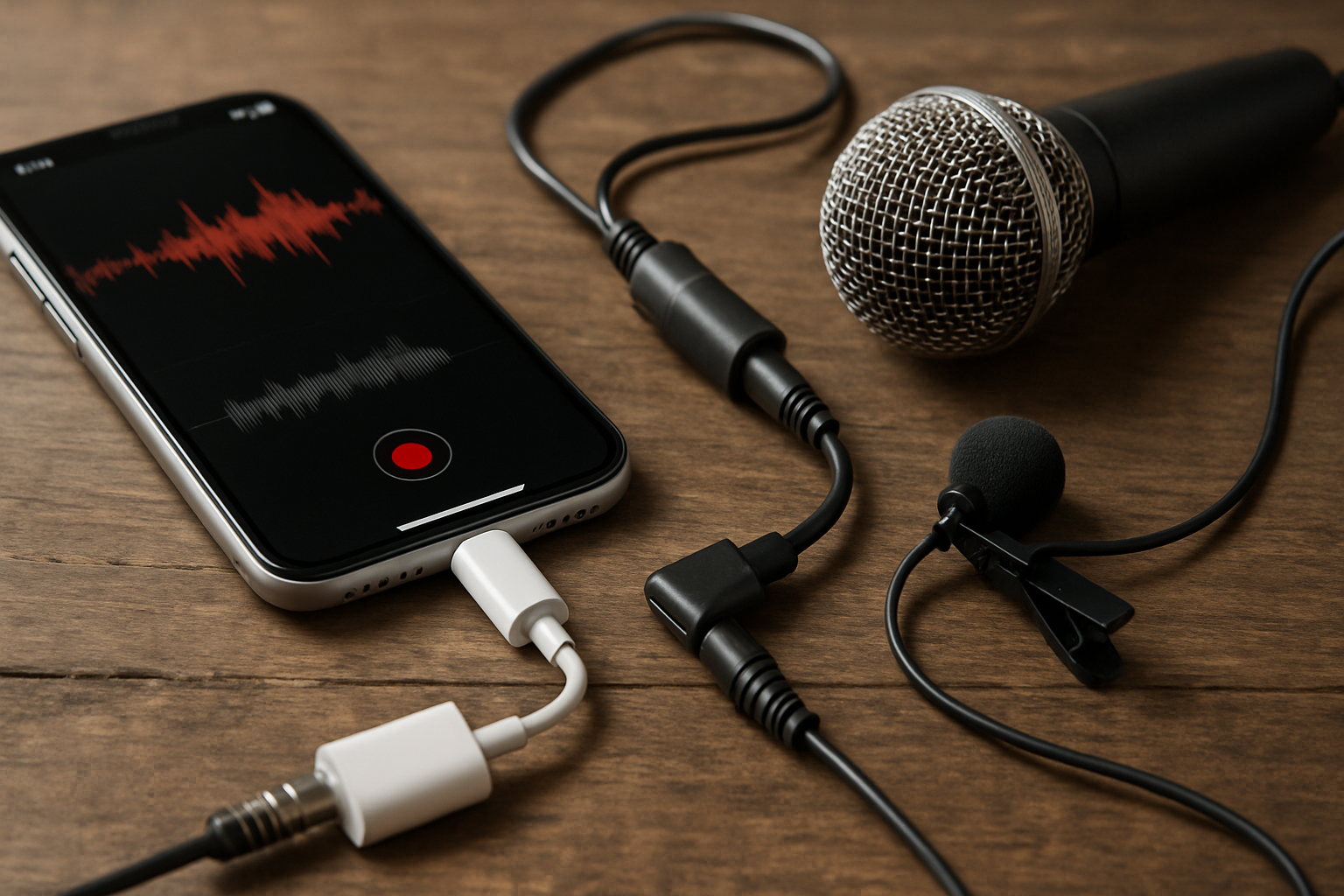
- Understanding iPhone Audio Recording Fundamentals
- Essential Adapter Categories for iPhone Recording
- Lightning to USB Adapters
- Digital Audio Converters and Preamps
- Wireless Transmission Systems
- Microphone Selection and Compatibility
- Dynamic Microphones for Versatile Applications
- Condenser Microphones for Studio Applications
- Lavalier and Wireless Systems
- Audio Interface Integration Strategies
- USB-Powered Interfaces
- Multi-Channel Recording Solutions
- Cable Management and Signal Integrity
- Power Management Considerations
- Monitoring and Quality Control
- Frequently Asked Questions
Understanding iPhone Audio Recording Fundamentals
Modern iPhone devices possess sophisticated built-in microphones and advanced audio processing capabilities, yet achieving professional-grade recordings requires supplementary equipment and strategic planning. The Lightning and USB-C ports serve as primary conduits for external audio peripherals, enabling creators to transcend the limitations of internal hardware.
Contemporary iOS devices support multiple audio formats including uncompressed WAV, lossless ALAC, and high-bitrate AAC configurations. Understanding these foundational elements empowers content creators to make informed equipment decisions that align with their specific recording objectives and budget constraints.
Essential Adapter Categories for iPhone Recording
Lightning to USB Adapters
The Camera Connection Kit and third-party alternatives facilitate seamless integration between iPhone devices and professional audio interfaces. These adapters enable phantom power distribution for condenser microphones while maintaining stable digital signal transmission. Bus-powered audio interfaces typically draw sufficient current through these connections, eliminating additional power requirements.
For creators seeking reliable connectivity solutions, specialized OTG (On-The-Go) adapters provide enhanced compatibility with various audio equipment configurations. The 2pcs OTG Adapter for iPhone Apple iOS Male to USB Female Audio DAC Headphone represents an innovative approach to iPhone audio connectivity challenges. This adapter incorporates a dedicated Digital-to-Analog Converter (DAC) chip that significantly improves audio quality compared to standard connection methods. The integrated headphone functionality allows real-time monitoring during recording sessions, while the USB-A female connector accommodates a wide range of professional microphones and audio interfaces.
Digital Audio Converters and Preamps
High-quality DACs eliminate the iPhone's internal audio processing limitations by providing dedicated conversion pathways. These devices often incorporate adjustable gain stages, enabling optimal input levels for dynamic microphones and line-level sources. Portable preamps with built-in analog-to-digital conversion offer additional flexibility for field recording scenarios.
Wireless Transmission Systems
UHF wireless microphone systems liberate performers from cable constraints while maintaining broadcast-quality audio fidelity. These systems typically operate within designated frequency ranges, avoiding interference from cellular networks and WiFi transmissions. Professional-grade wireless receivers connect directly to iPhone devices through appropriate adapters, streamlining the signal chain.
Microphone Selection and Compatibility
Dynamic Microphones for Versatile Applications
Dynamic microphones excel in high-SPL environments and require minimal phantom power considerations. Their robust construction withstands challenging recording conditions, making them ideal for live performances and outdoor sessions. The cardioid pickup patterns inherent in most dynamic designs provide excellent background noise rejection.
"Professional audio quality begins with proper microphone selection and appropriate impedance matching between source and recording device."
Condenser Microphones for Studio Applications
Large-diaphragm condensers capture nuanced vocal performances and acoustic instruments with exceptional clarity. These microphones require 48V phantom power, necessitating compatible audio interfaces or battery-powered solutions. Small-diaphragm condensers offer superior transient response for percussion recording and ambient sound capture.
Lavalier and Wireless Systems
Miniature lavalier microphones provide discrete recording capabilities for interview scenarios and presentation documentation. Modern wireless systems incorporate advanced frequency management and encryption protocols, ensuring reliable transmission in congested RF environments.
Audio Interface Integration Strategies
USB-Powered Interfaces
Compact audio interfaces designed for mobile recording applications typically feature dual-channel inputs with individual gain controls. These devices convert analog signals to high-resolution digital formats while providing zero-latency monitoring capabilities. Bus-powered operation eliminates external power supply requirements, enhancing portability.
Multi-Channel Recording Solutions
Professional scenarios often demand simultaneous multi-track recording capabilities. Four-channel and eight-channel interfaces enable complex recording setups while maintaining synchronization across all input sources. These systems typically require external power supplies but offer expanded connectivity options.
| Interface Type | Channel Count | Power Requirements | Ideal Applications |
|---|---|---|---|
| Basic USB Interface | 2-Channel | Bus-Powered | Podcasting, Solo Recording |
| Professional Interface | 4-8 Channel | External Power | Band Recording, Live Events |
| Portable Recorder | 2-4 Channel | Battery/USB | Field Recording, Interviews |
Cable Management and Signal Integrity
Professional audio cables significantly impact signal quality and system reliability. Balanced XLR connections eliminate ground loop interference and electromagnetic noise infiltration. High-quality cable construction features oxygen-free copper conductors and robust shielding materials.
- XLR cables for balanced microphone connections
- TRS cables for line-level equipment
- Lightning to USB adapters for iPhone connectivity
- Power distribution cables for complex setups
Proper cable routing prevents physical damage and reduces electromagnetic interference. Separating power cables from audio signals minimizes induced noise and maintains pristine recording quality.
Power Management Considerations
Extended recording sessions demand comprehensive power planning strategies. iPhone battery depletion during critical recordings represents a significant risk factor. External battery banks with Lightning pass-through capabilities enable simultaneous charging and audio interface operation.
Phantom power requirements for condenser microphones typically consume substantial current, necessitating either audio interface phantom power supplies or dedicated microphone power sources. Planning power consumption across all system components prevents unexpected equipment failures.
Monitoring and Quality Control
Real-time audio monitoring ensures optimal recording levels and immediate problem detection. Professional headphones with flat frequency response provide accurate signal representation without coloration. Closed-back designs offer isolation from ambient noise during recording sessions.
Level meters within recording applications display input signals and prevent digital clipping. Understanding proper gain staging prevents distortion while maximizing signal-to-noise ratios across the entire recording chain.
Frequently Asked Questions
Can iPhone record multiple microphones simultaneously?
Yes, when connected through compatible multi-channel audio interfaces, iPhone devices support simultaneous multi-track recording with professional applications.
Do wireless microphones work directly with iPhones?
Wireless microphone receivers require appropriate adapters or audio interfaces to connect with iPhone devices, as they typically use XLR or TRS output connections.
What's the maximum recording resolution supported by iPhone?
Current iPhone models support up to 24-bit/96kHz recording resolution when using compatible external audio interfaces and professional recording applications.
Professional iPhone audio recording requires thoughtful equipment selection and proper signal chain management. Quality adapters, microphones, and monitoring solutions transform mobile devices into capable recording platforms suitable for demanding applications across photography, videography, music production, and live performance scenarios.





Share:
Best Wireless Microphones for Live Performances in 2026
IEM vs Standard Earbuds: Which is Better for Musicians?